
Regular greasing is essential for keeping tractors, telehandlers, excavators, loaders and commercial vehicles working reliably. Neglected grease points can lead to premature wear, expensive repairs and machinery downtime.
But which type of grease gun is best for your operation?
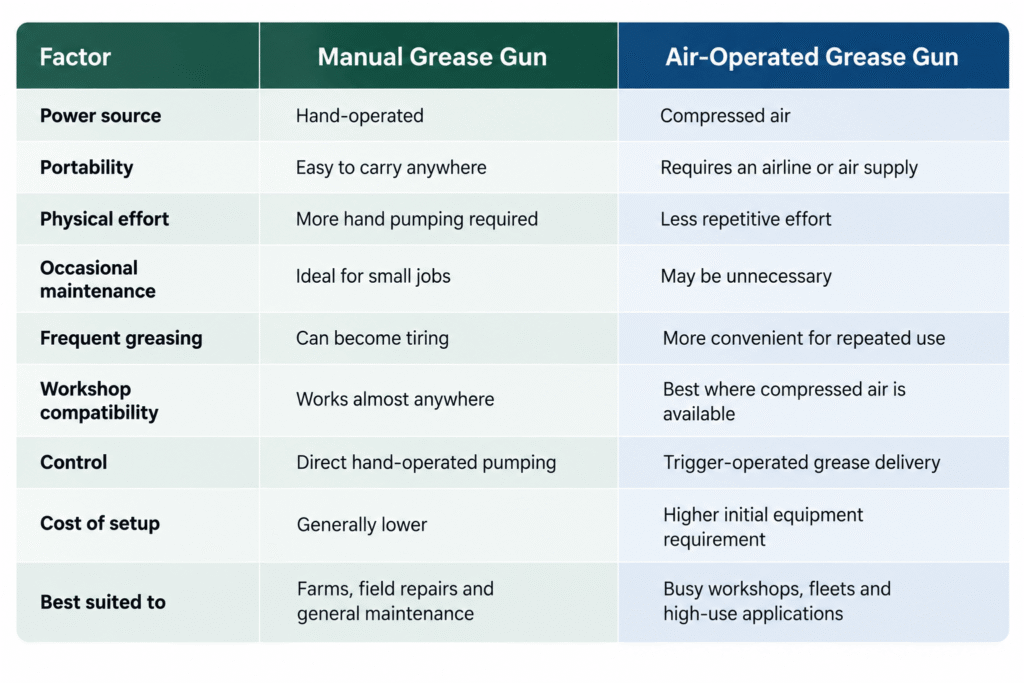
For a farmer maintaining a tractor and a few implements, a manual grease gun may be all that is needed. For an agricultural contractor, plant operator or busy fleet workshop servicing multiple machines every day, an air-operated grease gun could make lubrication faster and less physically demanding.
In this guide, we compare manual and pneumatic grease guns, explain their advantages and help you choose the right setup for your machinery.
Manual vs. Pneumatic Grease Gun: What Is the Difference?
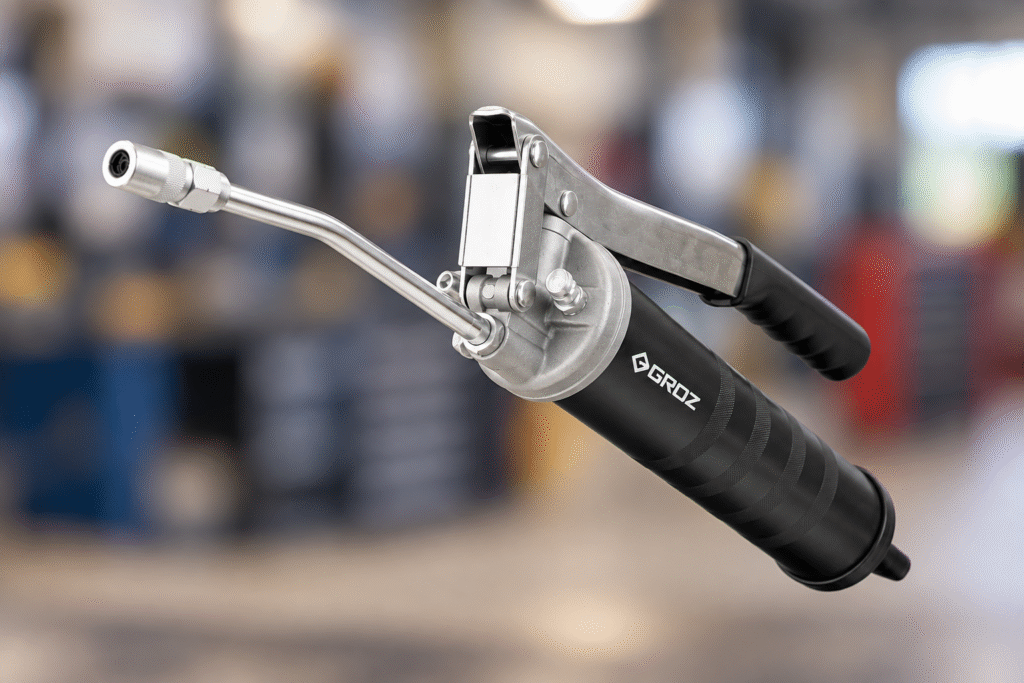
A manual grease gun uses a hand-operated lever or pistol grip to force grease through a hose and into a grease nipple.
A pneumatic, or air-operated, grease gun uses compressed air to power the pumping mechanism. Instead of repeatedly operating a handle, the operator activates grease delivery using a trigger.
Both systems are designed to deliver grease under pressure. The main difference is how they are powered, how much effort they require and how well they suit your maintenance routine.
You can compare the available manual and pneumatic grease guns at RotechShop.ie to find a suitable option for agricultural, commercial and industrial applications.
How Does a Manual Grease Gun Work?
A manual grease gun contains a grease barrel, pump mechanism, handle and delivery hose or pipe. Operating the handle draws grease into the pump and pushes it towards the grease fitting.
Manual grease guns are popular on farms because they are portable, straightforward to use and do not require compressed air or electricity. They are particularly useful for routine tractor maintenance and field repairs.
How Does an Air-Operated Grease Gun Work?
A pneumatic grease gun uses compressed air to operate its internal pump. Once connected to a suitable airline, the operator can apply grease using a trigger.
RotechShop.ie offers a 400g pneumatic grease gun for agricultural, commercial and workshop applications.
Air operation reduces repetitive hand pumping, making this type of grease gun useful when servicing multiple machines or carrying out frequent lubrication work.
Air-Operated vs. Manual Grease Gun Farm Machinery: Which Is Best?
The right choice depends on the number of machines you service, where you carry out maintenance and whether compressed air is available.
When Is a Manual Grease Gun the Better Choice?
A manual grease gun is often the most practical option when:
- You maintain a small number of tractors, loaders or implements.
- You need to carry equipment into fields or around the yard.
- Your machinery is serviced away from a workshop.
- You do not have access to a compressor.
- You want a simple, dependable backup for maintenance work.
A good-quality manual grease gun can provide everything a smaller farm needs for routine lubrication.
When Is an Air-Operated Grease Gun Worth It?
A pneumatic grease gun becomes more attractive when lubrication is frequent or physically demanding.
It may be a worthwhile investment if you:
- Service several tractors, excavators, loaders or commercial vehicles every day.
- Operate a workshop with a suitable compressed-air supply.
- Want to reduce repetitive pumping during long maintenance sessions.
- Need a more convenient way to handle numerous grease points.
Before purchasing, check that your compressor can supply the required air pressure and airflow. A pneumatic gun is only useful if it is compatible with your existing workshop equipment.
400g Lever Grease Gun High PSI: Does Higher Pressure Mean Better?
Grease guns are often advertised with pressure ratings such as 6,000 PSI, 8,000 PSI or 10,000 PSI.
A high-pressure manual grease gun can be useful for demanding lubrication applications, but a higher PSI rating does not automatically mean better performance.
Pressure capability is different from grease flow rate. A gun with a higher maximum pressure may not deliver grease faster than a lower-rated model.
When choosing a 400g lever grease gun, consider:
- The manufacturer’s recommended grease specification.
- The condition of your grease fittings.
- The pressure required for your application.
- The gun’s ease of use and reloading.
- The quality of the hose and coupler.
If grease will not enter a fitting, do not simply keep increasing the pressure. The fitting may be blocked or damaged and should be checked safely.
Pistol Grip vs. Lever Grease Gun Ag Machinery: Which Should You Choose?
Both designs can be suitable for tractors and agricultural machinery, but they offer different handling benefits.
Lever Grease Guns
Lever grease guns use a long handle that is pumped back and forth.
They offer good mechanical leverage and are useful for high-pressure manual greasing. However, they generally require both hands to operate and hold in position.
Pistol-Grip Grease Guns
Pistol-grip models use a trigger-style handle and can be easier to operate in restricted spaces.
They may be more convenient when you need to reach awkward grease points or hold the gun in a particular position. However, they are not automatically better for every high-pressure application.
The best choice is the design that allows you to reach the grease points safely and operate the gun comfortably.
Air-Operated Greaser for Plant Machinery: What Should You Check?
If you are considering an air-operated greaser for plant machinery, look beyond its pressure rating.
Compressed-Air Requirements
Check the gun’s operating pressure and airflow requirements. Your compressor must be capable of supplying the gun while other pneumatic tools are in use.
Grease Compatibility
Make sure the gun is suitable for the type and consistency of grease recommended by your machinery manufacturer.
Grease viscosity can affect performance, particularly during cold weather in Ireland.
Hose and Coupler Quality
A suitable hose length makes it easier to reach grease points on large machinery. A reliable coupler should connect securely to the grease nipple and minimise leakage.
Portability
A pneumatic gun may be ideal in a workshop, but a manual gun could be more practical when servicing machinery in fields or remote yards.
Choose a setup that suits where your equipment is actually maintained.
Bucket Greaser for Farm Equipment: Is Bulk Filling Worth It?
If your farm or workshop uses large quantities of grease, bulk filling may be a convenient alternative to changing cartridges regularly.
A bucket greaser, also known as a grease filler pump, transfers grease from a larger container into a compatible grease gun.
RotechShop.ie offers a bucket greaser for operations looking for a more convenient bulk-filling solution.
Benefits of Bulk Filling
- Less time spent changing cartridges.
- Convenient for regular workshop maintenance.
- Potentially less packaging waste.
- Useful for operations that consume substantial quantities of grease.
The filling process must be kept clean to prevent dirt and moisture from contaminating the grease. Always use the correct grease specification and compatible equipment.
For smaller farms, cartridges may remain the simplest option. For busy workshops, bulk filling can improve convenience.
Common Greasing Mistakes to Avoid
Choosing the right grease gun is only part of effective machinery maintenance.
Use the Correct Grease
Always follow the machinery manufacturer’s instructions for grease type, consistency and compatibility.
Do Not Over-Grease
Applying too much grease can damage seals or interfere with certain components. Follow the recommended quantities and intervals.
Keep Grease Fittings Clean
Wipe grease nipples before attaching the coupler. Dirt entering the lubrication system can cause unnecessary wear.
Check Blocked or Damaged Fittings
If grease will not enter a fitting, investigate the cause rather than continually increasing pressure.
Inspect Your Equipment
Check hoses, couplers and grease guns for leaks or damage. Never grease machinery while moving parts are operating, and follow the appropriate isolation and safety procedures.
Which Grease Gun Should You Choose?
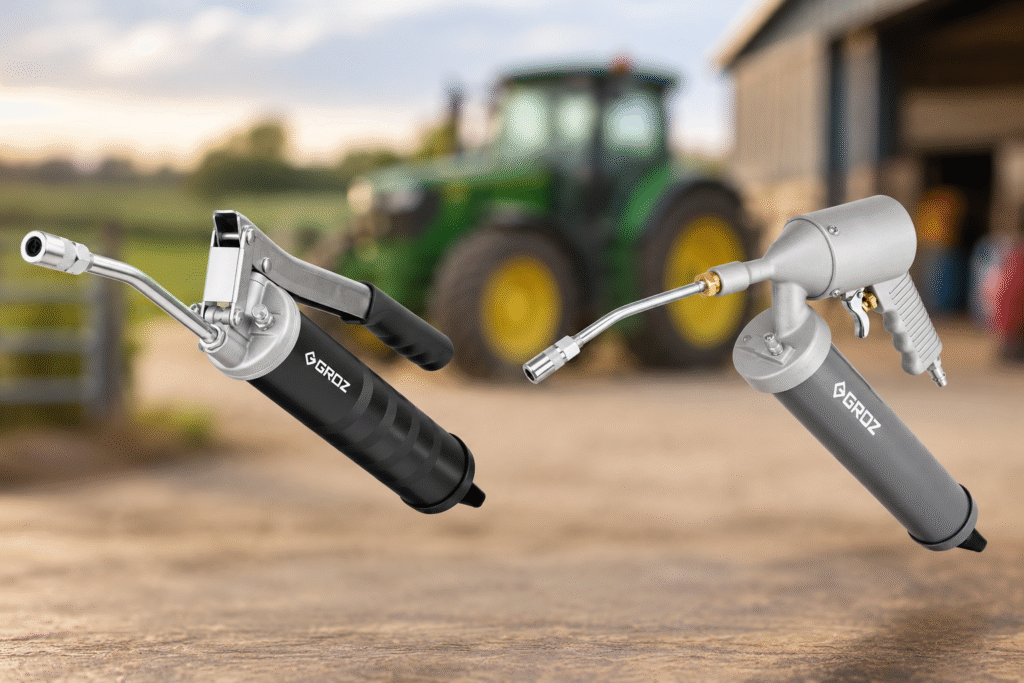
For many Irish farmers and smaller agricultural workshops, a manual grease gun remains the most practical option. It is portable, reliable and works without an airline.
For agricultural contractors, plant workshops and commercial fleet operators, an air-operated grease gun can reduce repetitive pumping and make frequent lubrication more convenient.
If your operation uses substantial quantities of grease, a bulk-filling pump or larger pneumatic greasing system may also be worth considering.
The best choice depends on your machinery, maintenance schedule, workshop facilities and budget.
Find the Right Greasing Equipment for Your Operation
RotechShop.ie supplies grease guns and greasing equipment for agricultural, commercial and industrial applications.
Whether you need a 400g manual grease gun for tractor maintenance or a pneumatic setup for a busy plant workshop, choosing the right equipment can make routine lubrication easier and more efficient.
Browse the grease gun range at RotechShop.ie to find a suitable solution for your farm, workshop or commercial fleet.