Is Your Diesel Being Stolen? 5 Signs Your Fleet Needs A Fuel Management System
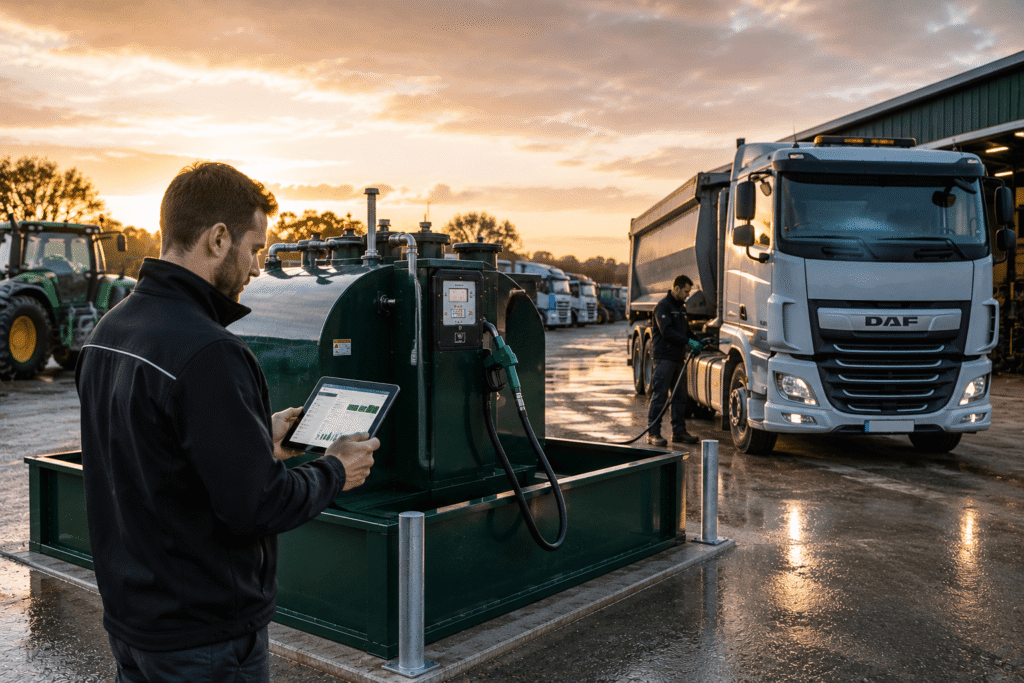
Fuel theft is rarely obvious.
Most Irish farmers, contractors and fleet owners do not notice it happening overnight. There is no broken lock. No empty tank. No clear warning sign.
Instead, diesel disappears slowly. A few litres here. A top up that seems higher than expected. Deliveries arriving sooner than planned.
Over months, those small losses become thousands of euro.
With diesel prices remaining one of the biggest operating costs for farms, haulage fleets and construction businesses, uncontrolled fuel storage is now a real financial risk. The businesses reducing losses in 2026 are the ones treating fuel as an asset that needs managing, not just storing.
Here are five clear signs your operation may need a proper fuel management system.
1. Your Fuel Usage Never Quite Matches The Work Done
You know roughly how much fuel your machines should use.
A tractor working silage.
An excavator on site.
Artics covering regular routes.
When fuel consumption starts creeping upward without any increase in workload, something is wrong.
Common warning signs include:
- Fuel deliveries happening more frequently
- Machines appearing less efficient than normal
- Monthly fuel spend rising without explanation
Without metering or tracking, it becomes impossible to know whether fuel loss is caused by inefficiency, operator habits or unauthorised use.
A fuel management system records exactly how many litres leave the tank and when. Once usage becomes visible, unexplained losses usually stop quickly.
2. Multiple People Have Open Access To Your Tank
Many yards still operate with unrestricted fuel access.
Anyone can fill a vehicle.
No recording.
No tracking.
No accountability.
This creates risk even within trusted teams. Fuel taken for personal vehicles, borrowed for machinery elsewhere or removed after hours often goes unnoticed because there is no monitoring in place.
Modern fuel management systems allow controlled dispensing using driver keys, PIN access or vehicle tracking. Every litre is logged against a user or machine.
Accountability alone is often enough to prevent loss.
3. Your Tank Levels Drop Overnight Or Over Weekends
Diesel theft across rural Ireland has increased in recent years, particularly from farms, haulage yards and construction sites located away from busy roads.
Professional thieves rarely empty tanks completely. Instead, they remove manageable quantities that avoid immediate detection.
Warning signs include:
- Tank levels lower than expected on Monday morning
- Unexpected drops after weekends or holidays
- Fuel running low sooner than delivery schedules suggest
Lockable bunded tanks combined with monitored dispensing systems dramatically reduce this risk. Some systems also provide remote tank level monitoring, allowing owners to check fuel levels without visiting the site.
If you cannot verify your tank level remotely, theft can go unnoticed for weeks.
4. You Cannot Allocate Fuel Costs Per Machine Or Job
For contractors and fleet operators, fuel is directly tied to profitability.
If you cannot answer questions like:
How much fuel did that excavator use last month?
Which vehicle consumes the most diesel?
What fuel cost was assigned to that contract?
then fuel management becomes guesswork.
A fuel management system paired with flow meters and monitoring software allows fuel usage to be tracked per vehicle, operator or project.
This helps you:
- Identify inefficient machinery
- Allocate true operating costs
- Improve pricing accuracy on jobs
- Reduce unnecessary consumption
Better data leads to better decisions.
5. You Rely On Manual Checks And Estimates
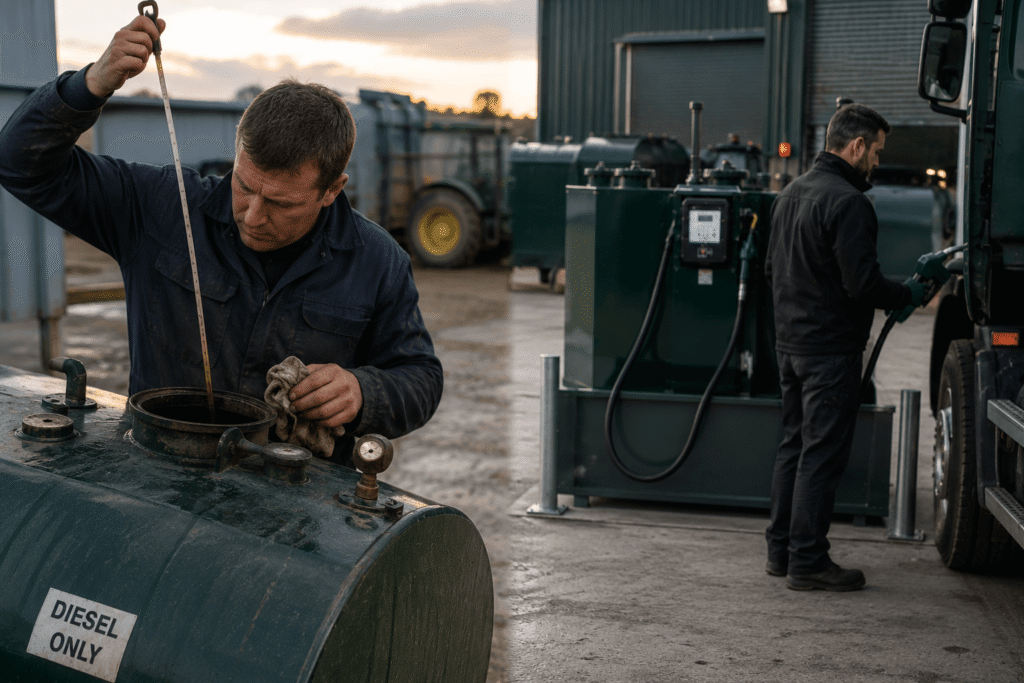
Dipsticks and visual checks still exist on many sites.
They work, but only when someone remembers to check consistently. Manual monitoring leaves large gaps where losses occur unnoticed.
Fuel management systems automate the process by recording dispensing activity continuously. Some systems provide usage reports, refill alerts and low level warnings.
Instead of reacting when fuel runs out, you stay ahead of consumption.
Automation removes uncertainty.
Why Fuel Theft And Waste Cost More Than You Think
Fuel loss is not limited to theft alone.
Untracked dispensing leads to:
- Overfilling
- Spillage
- Idling misuse
- Poor operator habits
- Contaminated fuel usage
Across a busy farm or fleet, even a five percent loss can represent several thousand euro per year.
For a business using 50,000 litres annually, losing just five percent equals 2,500 litres. At current diesel prices, that quickly becomes a significant hidden expense.
What A Fuel Management System Actually Does
A modern fuel management setup typically includes:
- Bunded diesel storage tank
- High accuracy flow meter
- Controlled access dispensing
- Fuel filtration system
- Tank level monitoring
- Usage reporting
Together, these components give full visibility and control over your diesel supply.
You know who dispensed fuel, when it was taken and how much was used.
The Reality For Irish Farms And Fleets In 2026
Margins across agriculture, transport and construction continue to tighten. Fuel remains one of the few major costs that operators can actively control.
The shift happening across Ireland is simple.
Operators are moving from fuel storage to fuel management.
Those who monitor usage reduce waste.
Those who control access prevent loss.
Those who track consumption improve efficiency.
If your fuel usage feels unpredictable, your diesel may already be costing more than it should.
A properly managed system does not just prevent theft. It protects profitability every day.