
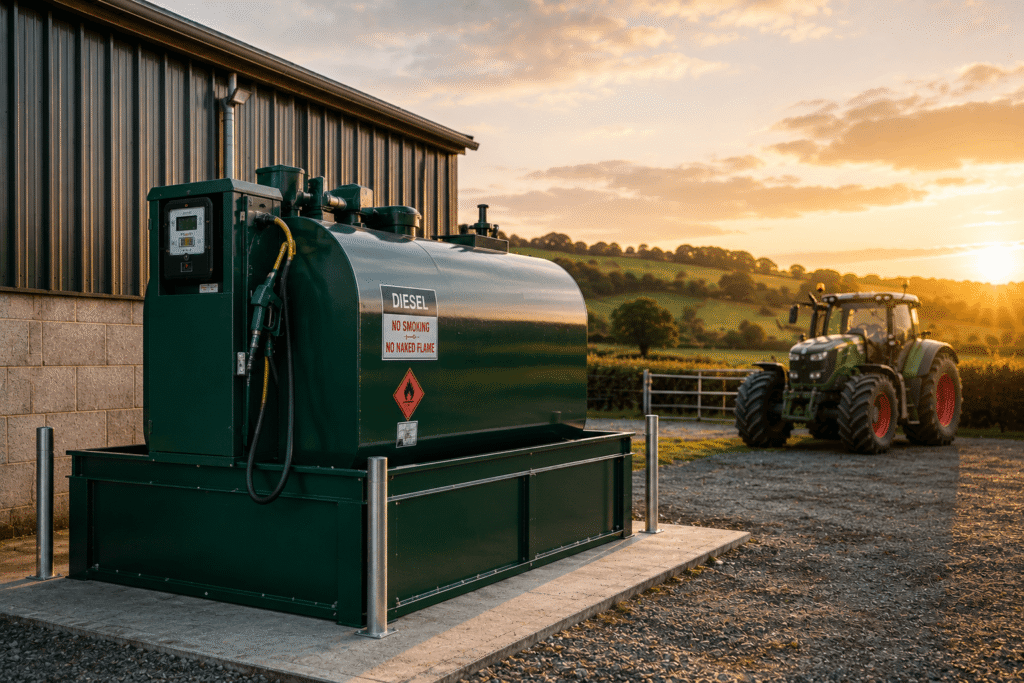
If you store diesel on a farm, in a yard, or for a fleet in Ireland, the question of single-skin vs bunded fuel tanks comes up sooner or later. Many operators still use older single-skin tanks, while others have moved to bunded tanks to stay compliant and reduce risk. The right choice depends on where the tank is located, how it is used, and who expects you to meet certain standards.
What Is the Difference?
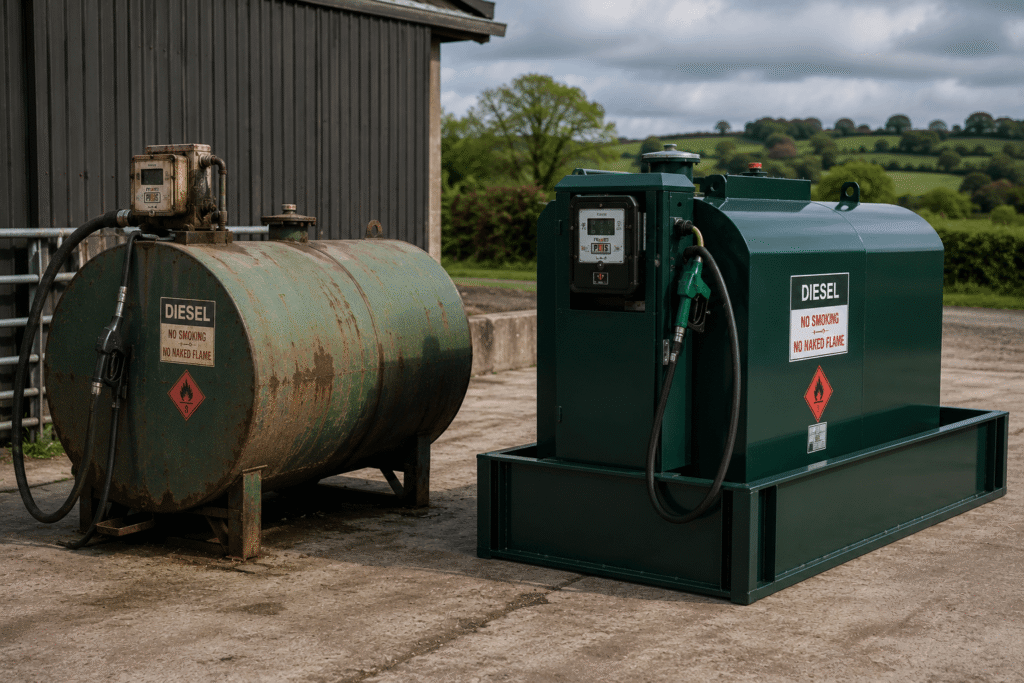
A single-skin tank has one wall that holds the fuel. If it leaks, fuel goes straight onto the ground.
A bunded tank is a tank within a tank. The inner tank holds the fuel, while the outer tank acts as secondary containment, capable of holding at least 110 percent of the tank’s contents.
The difference matters when it comes to environmental protection, insurance, and inspections.
Are Bunded Tanks Legally Required in Ireland?
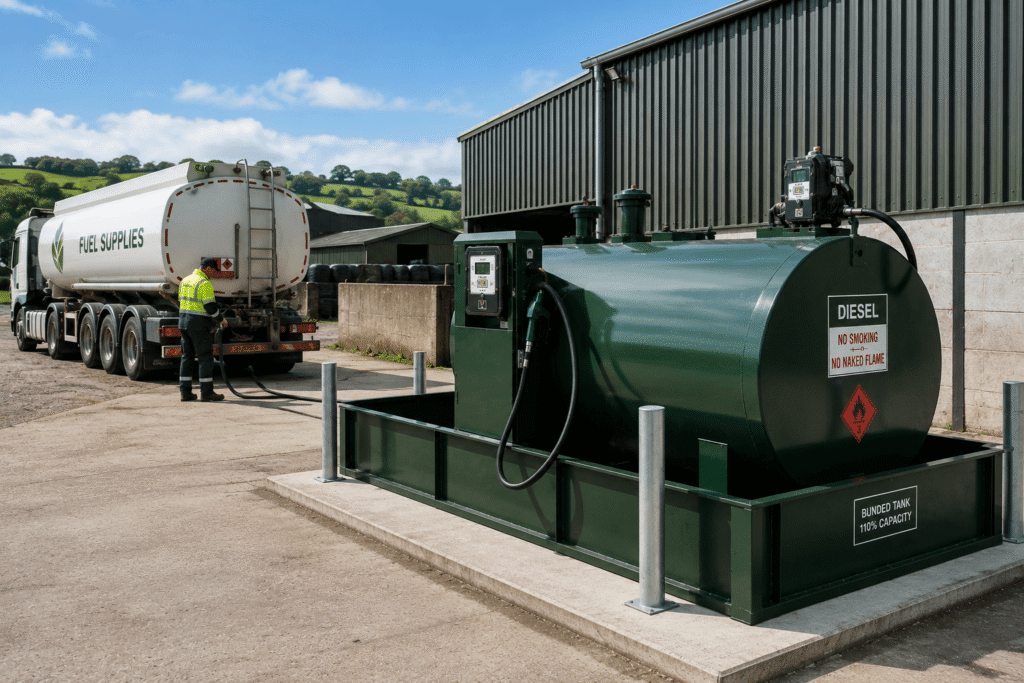
There is no single rule that says every fuel tank in Ireland must be bunded. However, that does not mean single-skin tanks are always acceptable.
Bunded tanks are often required when:
- Fuel is stored near drains, streams, or watercourses
- Tanks are located in commercial or industrial yards
- Insurance policies specify bunded storage
- Local authorities or environmental guidelines apply
- The tank is visible to the public or on leased land
For farms, older single-skin tanks may still be in use, but any new installation is strongly expected to be bunded. In practice, insurers and advisors increasingly treat bunded tanks as the minimum standard.
Why Many Farms and Fleets Choose Bunded Tanks
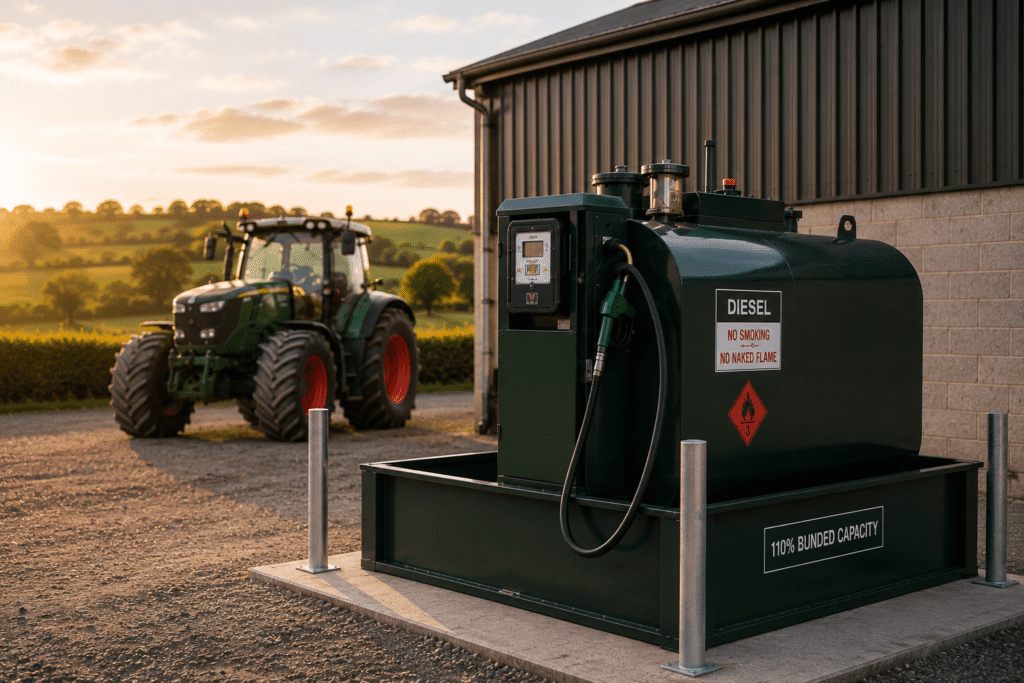
The main reason is risk reduction. A leak from a single-skin tank can lead to soil contamination, clean-up costs, fines, and insurance claims. A bunded tank contains the spill and gives you time to deal with the problem properly.
Other benefits include:
- Easier insurance approval
- Better long-term compliance
- Improved resale value
- Reduced environmental liability
For fleet operators and haulage yards, bunded tanks are often non-negotiable.
When a Single-Skin Tank May Still Be Used
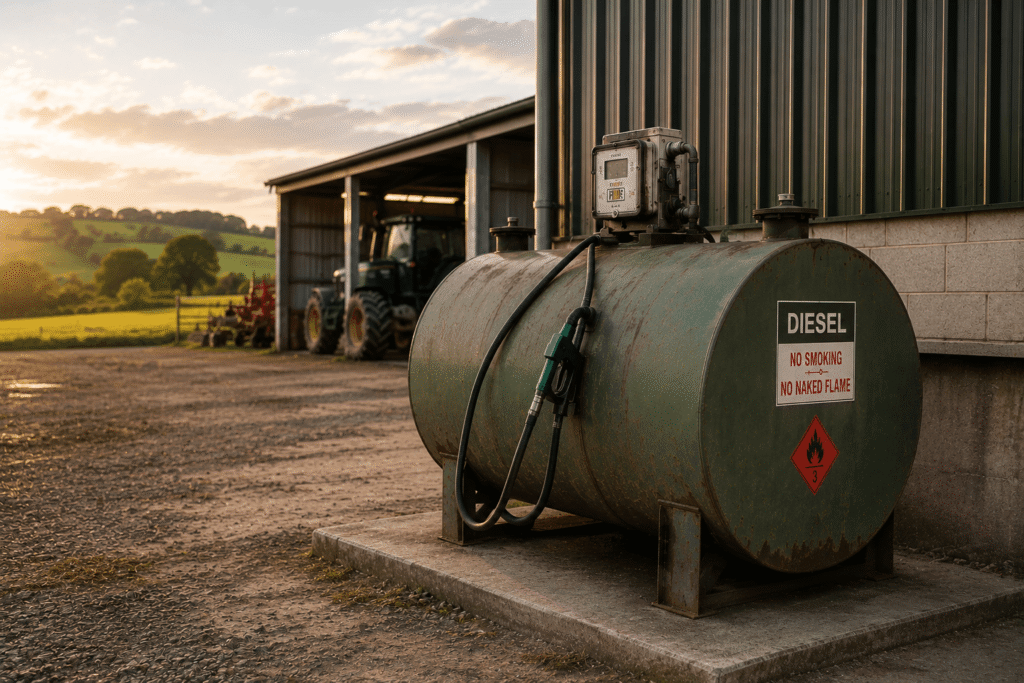
Single-skin tanks are sometimes used for:
- Temporary storage
- Sheltered indoor locations
- Low-volume use with regular inspection
However, even in these cases, they carry more risk. Many operators who start with a single-skin tank eventually replace it after an insurance review or near-miss incident.
The Practical Bottom Line
If you are installing a new diesel tank in Ireland, a bunded tank is the safest and most future-proof option. It avoids arguments later with insurers or inspectors and protects your land and business.
Single-skin tanks may still exist, but they are becoming harder to justify. For most farms and fleets, bunded is the sensible choice.