
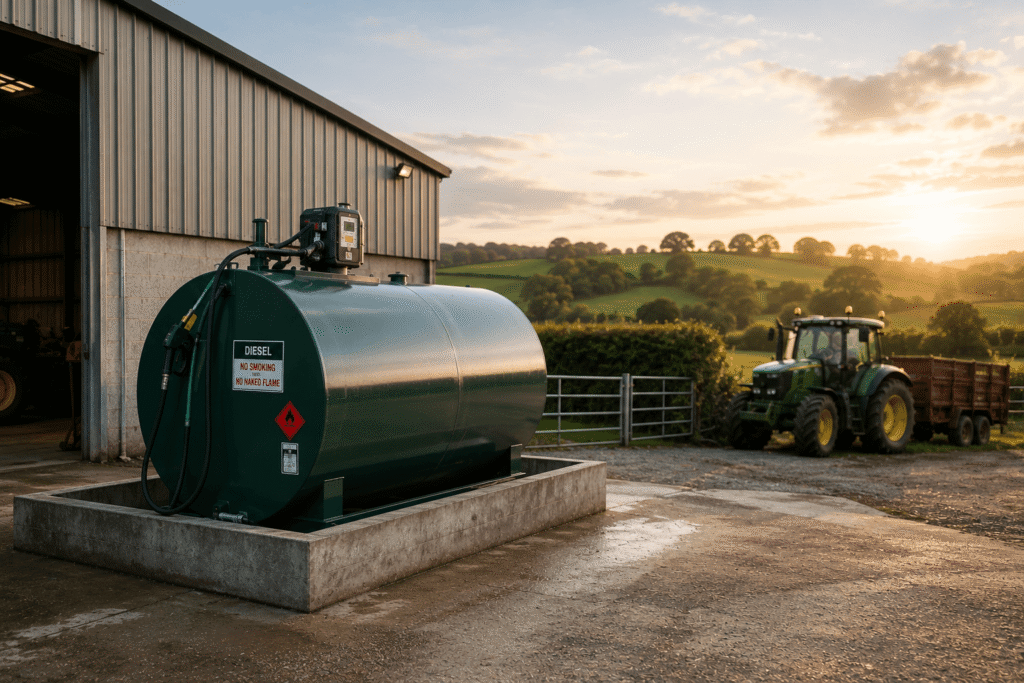
Diesel storage on Irish farms is often taken for granted until something goes wrong. Contaminated fuel, water ingress, theft, or a leak can bring machinery to a standstill at the worst possible time. Safe diesel storage is not complicated, but it does require attention to a few key details, especially as seasons change.
Choosing the Right Tank Location
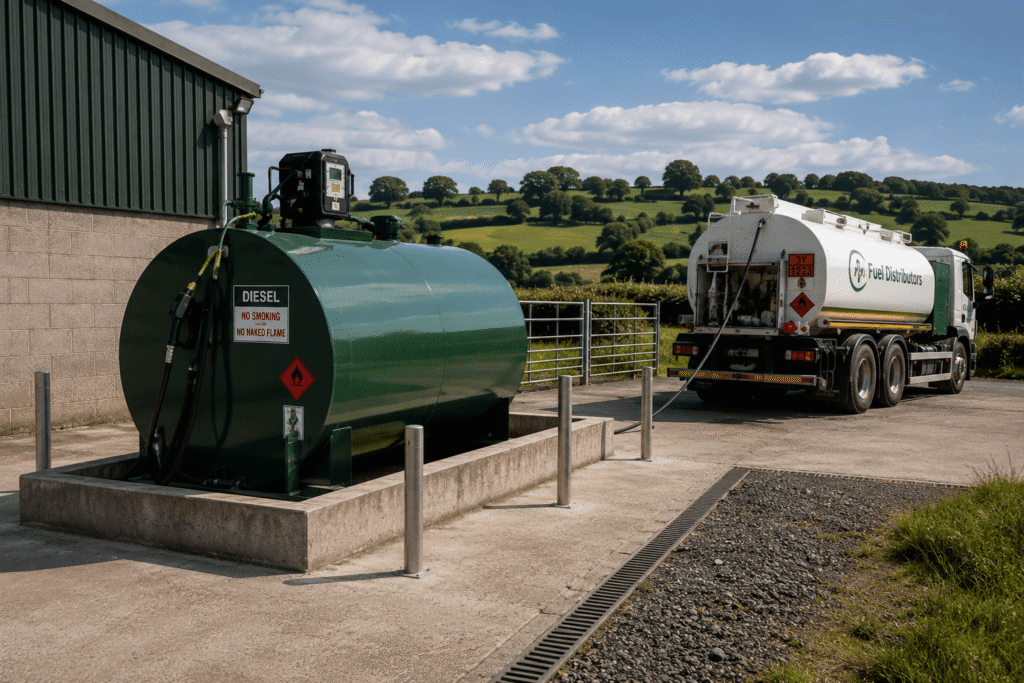
Location matters more than many people realise. Diesel tanks should be:
- Placed on a solid, level base
- Positioned away from drains and watercourses
- Easily accessible for deliveries
- Visible for regular inspection
A poorly placed tank increases the risk of spills and makes problems harder to spot early.
Keep Water Out of Your Diesel
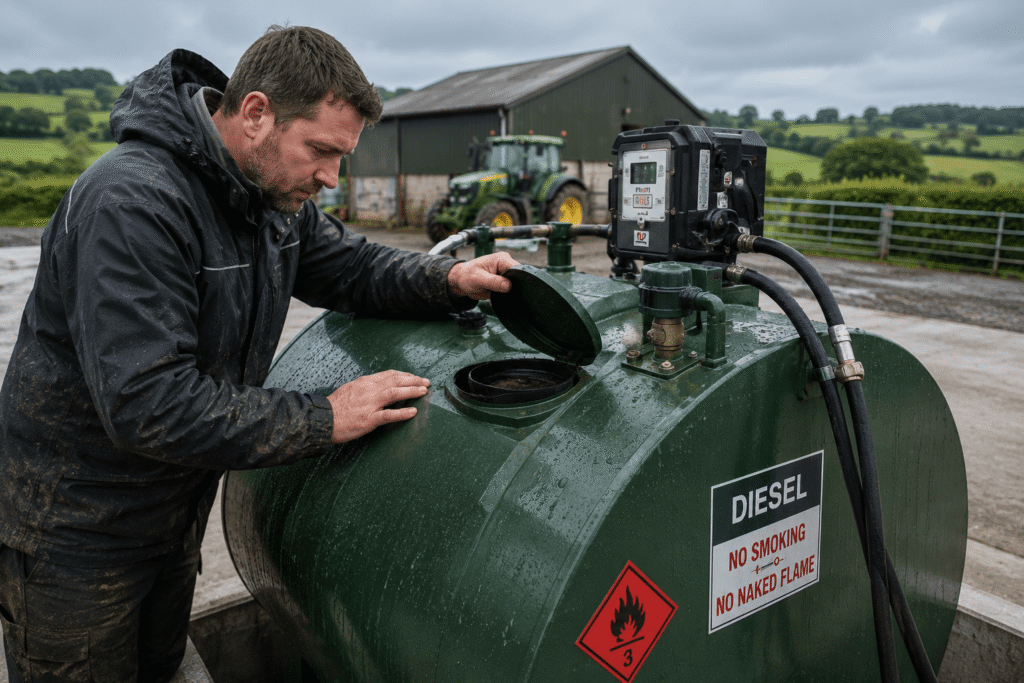
Water contamination is one of the most common diesel problems on Irish farms. It comes from condensation, damaged lids, or poorly sealed fittings.
To reduce water ingress:
- Keep tank lids sealed properly
- Use tanks with sloped tops to shed rainwater
- Drain water from the tank periodically if possible
- Avoid storing diesel for long periods without turnover
Water in diesel leads to injector damage, blocked filters, and breakdowns during busy periods.
Winter Diesel Storage Tips
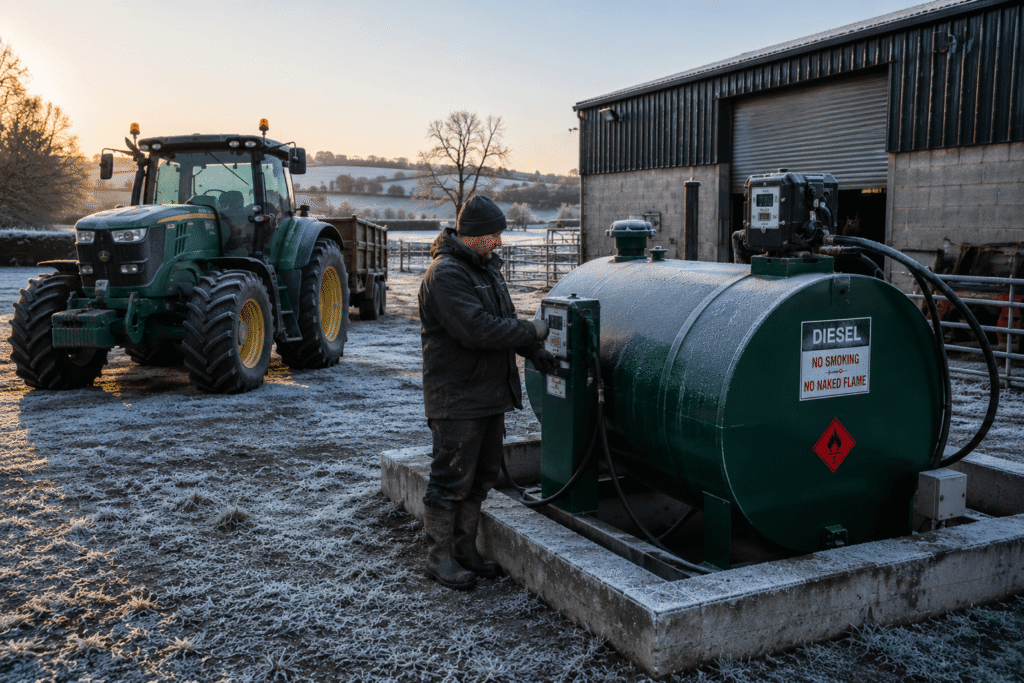
Cold weather brings specific challenges. Diesel can thicken, and condensation increases when temperatures fluctuate.
During winter:
- Keep tanks as full as practical to reduce condensation
- Check filters more frequently
- Inspect tanks after frost or freezing conditions
- Ensure pumps and hoses are protected from ice damage
A small amount of prevention avoids major downtime during winter feeding or slurry periods.
Summer Diesel Storage Tips
Summer brings different risks, especially algae growth and theft.
During warmer months:
- Avoid letting diesel sit unused for long periods
- Keep tanks shaded or UV-protected
- Lock pumps and cabinets
- Monitor fuel usage patterns to detect theft early
Warm diesel combined with water creates ideal conditions for microbial growth.
Theft Prevention on Farms
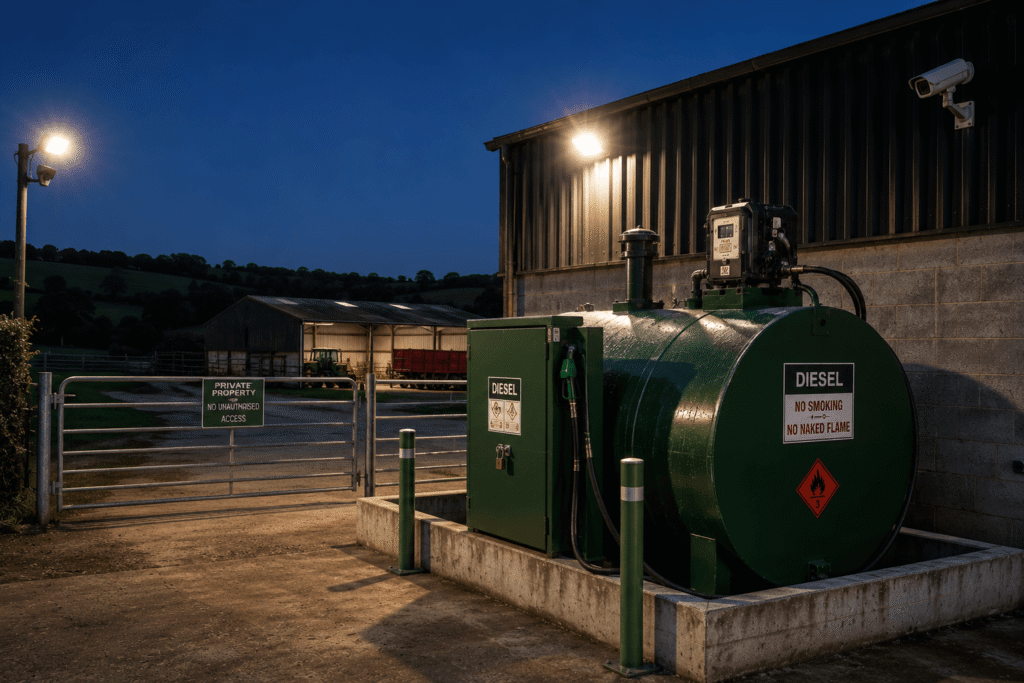
Fuel theft is an ongoing issue in rural Ireland. Simple steps reduce risk significantly:
- Use lockable pump cabinets
- Install motion lights or cameras
- Avoid leaving mobile tanks unattended overnight
- Keep records of fuel usage
A secure tank is as important as a good tank.
Regular Inspections Matter
Make tank checks part of your routine. Look for:
- Cracks or bulging
- Rust or corrosion
- Leaks around fittings
- Damaged hoses or nozzles
Early detection prevents expensive clean-ups.
The Practical Bottom Line
Safe diesel storage is about routine, not complication. A good tank, sensible location, seasonal awareness, and basic security measures keep fuel clean and machinery running.
On a working Irish farm, prevention is always cheaper than repair.